
Study on Galatians (with podcast links)
Common Bible Passages Used by the Mormons Index
Biblical Issues
- Why a modern translation of the Bible can be beneficial
- Why is inerrancy of the Bible so important to Evangelical Christians?
- 10 Common Mistakes Latter-day Saints Make When Interpreting the Bible
- 10 Reasons Why it Makes Sense to Trust the Bible
- Why do Christians consider the Bible to be the exclusive source of Truth?
- Apostasy: Calling the Apostle John
- Regarding an Open Canon
- Apostasy: Acts 1 and the Apostles
- Noah
- Mormonism’s View: The Bible we have today “is rather incomplete” (blog)
- What do Mormons believe about the Bible? (blog)
- Do Mormons have faith in the Bible? (blog)
- Can Mormons trust the Bible? (blog)
- Mormons and the Bible (blog)
Archaeology
- Archaeology and the Bible
- Top 10 20th Century Archaeological Discoveries in Israel
- The Dead Sea Scrolls: It’s time for LDS laypeople to stop using these manuscripts as evidence for Mormonism (+podcast series)
- Dead Sea Scrolls Q&A
- Evidence for New Testament Roman rulers (supporting the Bible)
Bible Translation
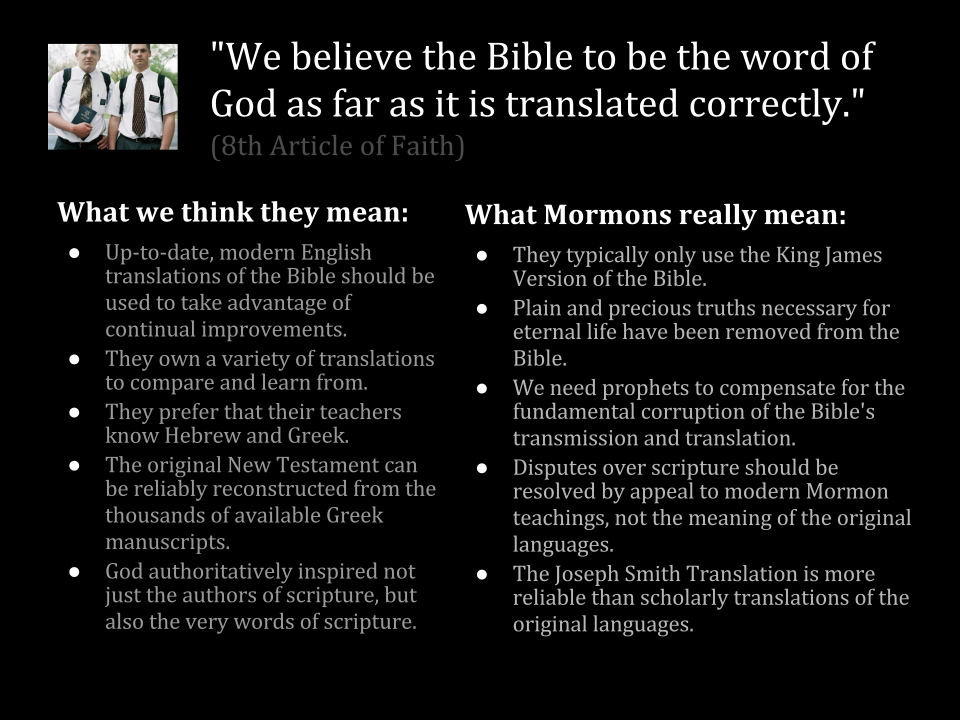
- Does Scholarship Support Article Eight?
- What if the Bible was translated correctly after all?
- Why are there so many translations of the Bible?
- Joseph Smith’s Alleged Ignorance of the Bible
- Regarding an Open Canon
- Video: Why are there so many translations of the Bible?
- Ignorant Translators commit many errors (Blog)
Bible Verses
- Why do you trust the Bible when it has so many contradictions?
- 10 Awesome Bible Verses to Use with Latter-day Saints!
- Would you be willing to take the Romans Challenge? En Espanol
- Common Bible Verses Used by Latter-day Saints
- Justification by Faith and the Book of James
Joseph Smith/Joseph Smith Translation
- The Joseph Smith Translation
- The Joseph Smith Translation: An Improvement over the Original? Or Much Ado about Nothing?
- Why Isn’t the Joseph Smith Translation (Inspired Version) of the Bible used today?
- The Joseph Smith Translation: Inspired by whom?
- Faith alone and the Joseph Smith Translation
- Bible prophecies about Joseph Smith?
Video series from the Holy Land (featuring archaeologist/filmmaker Joel Kramer)
- Four episodes from the February 2018 Israel trip led by Eric Johnson
- Four episodes from the February 2017 Israel trip led by Eric Johnson
- A series of 16 episodes from the February 2015 Israel trip led by Eric Johnson
- A series of 26 episodes from the February 2013 Turkey/Israel trip led by Eric Johnson
- A set of different video clips from 2017
- Photos from the 2013 MRM trip to Turkey and Israel
Viewpoint on Mormonism Podcasts
- What is Inerrancy? Part 1 Part 2 Part 3 Part 4 Part 5 March 1-5, 2021 Article
- 10 Common Mistakes When Reading the Bible Part 1 Part 2 Part 3 Part 4 Part 5 February 8-12, 2021 Article
- Archaeology of Israel (interview with Chip Thompson) Part 1 Part 2 Part 3 February 26-27, 2018
- The Dead Sea Scrolls and Mormonism Part 1 Part 2 Part 3 Part 4 Part 5 February 19-23, 2018 Article
- A Study through the Book of Galatians Part 1 Part 2 Part 3 Part 4 Part 5 Part 6 Part 7 Part 8 Part 9 Part 10 Part 11 Part 12 Part 13 Part 14 Part 15 Part 15 Part 16 Part 17 Part 18 Part 19 Part 20 Part 21 Part 22 Part 23 Part 24 Part 25 Part 26 Part 27 Part 28 Part 29 Part 30 Part 31 Part 32 Part 33 Part 34 July 10-August 25, 2017
- James White and Article 8 (Bible) Part 1 Part 2 Part 3 Part 4 Part 5 July 3-7, 2017
- The Isaiah passages Part 1 Part 2 November 21-22, 2016
- Archaeologist Joel Kramer Interview October 17-November 3, 2016: Part 1 Part 2 Part 3 Part 4 Part 5 Part 6 Part 7 Part 8 Part 9 Article
- A Blurry Bible August 8, 2016
- Scripture Translation Part 1 Part 2 Part 3 June 30-July 2, 2016
- Henry Eyring misues Matthew 18 May 17, 2016
- Interview with Bethel Seminary Professor/NT Scholar Mark Strauss Part 1 Part 2 Part 3 Part 4 Part 5 February 22-26, 2016
- America’s 100 Most Bible Based Cities Part 1 Part 2 Part 3 Feburary 9-11, 2016
- Biblical sites videos April 3, 2015
- The Bible in America Part 1 Part 2 September 4-5, 2014
- The Joseph Smith Translation (Inspired Version) Part 1 Part 2 Part 3 Part 4 Part 5 Part 6 April 14-18, 2014 (Article 1) (Article 2)
- Can the Bible be trusted (Rob Bowman)? Part 1 Part 2 Part 3 March 12-14, 2014 (Series of articles)
- Dead Sea Scrolls Part 1 Part 2 Part 3 Part 4 November 19-22, 2013 (Article)
- The Bible in America Part 1 Part 2 April 23-24, 2013
- The Bible and Archaeology Part 1 Part 2 Part 3 Part 4 Part 5 March 18-22, 2013
- The Bible is Enough (Marv Cowan talk) Part 1 Part 2 Part 3 Part 4 March 11-14, 2013
- Bible August 29, 2012 (List of articles)
- The Bible: Real Places, Real People December 27, 2011
- Revelation 22:18 September 21, 2011 (Article)
- Scripture July 28, 2011
Off Site Articles
- I heard the voice of God (Piper, off-site)
- Chicago Statement on Biblical Inerrancy
- Rightly interpreting (Rhodes)
- Gnostic Gospels (CRI)
- NT influenced by pagan philosophy? (CRI)
- NT influenced by pagan religions? (CRI)
- Sola scriptura in early church (ChristianAnswers.net)
- Manuscript support (Rhodes)
- Are the Biblical Documents Reliable?